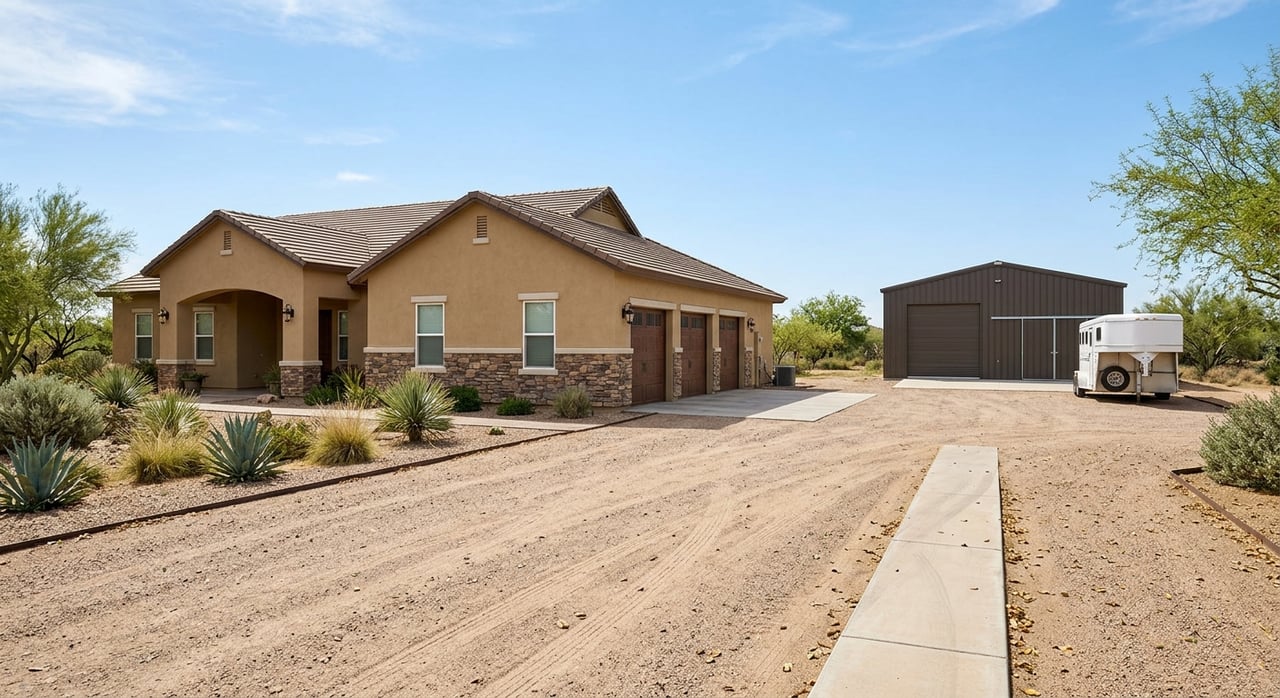
Looking for room to spread out without giving up access to the Phoenix metro? Queen Creek stands out for buyers who want larger lots, horse-friendly property options, and a more rural feel that still stays connected to everyday conveniences. If you are exploring acreage or equestrian living here, the details matter, and this guide will help you understand the lifestyle, property rules, and practical checkpoints that can shape your decision. Let’s dive in.
Why Queen Creek Appeals to Acreage Buyers
Queen Creek has built its identity around balancing growth with its agricultural roots. In the Town’s General Plan, the vision is described as preserving agricultural heritage while maintaining the “convenience of the city, comfort of the country.”
For you as a buyer, that vision helps explain why Queen Creek draws interest from people who want more land and a different pace of living. The area sits in both Maricopa and Pinal counties, is about 10 minutes from Mesa Gateway Airport, around 45 minutes from Sky Harbor, and borders San Tan Mountain Regional Park to the south.
That combination can be especially appealing if you want open space without feeling disconnected. You may be able to enjoy larger parcels, horse-oriented features, and trail access while still reaching major employment centers, airports, shopping, and regional amenities with relative ease.
What Equestrian Living Really Means
Equestrian living is about more than finding a home with a big lot. In Queen Creek, your experience will depend on the parcel size, zoning district, permit requirements, and how you plan to use the property.
That is why acreage buyers need to think beyond the listing photos. A property may look ideal for horses or outbuildings, but the actual rules tied to the parcel determine what is allowed.
Zoning Shapes What You Can Do
Queen Creek’s accessory structure guidance separates rural districts from suburban and urban districts. Rural districts listed by the Town include A-1, AT, R1-190, R1-154, R1-108, R1-54, and R1-43, and each district can affect placement and design rules for detached structures and stables.
For example, in rural districts, detached accessory buildings may be placed 5 feet from the rear property line under stated conditions. The Town also says stables for agricultural animals generally must sit behind the front face of the home and be set back at least 5 feet from rear and side property lines.
If you are comparing multiple horse properties, this is a major point to verify early. Two homes with similar acreage may not offer the same flexibility if their zoning or lot configuration differs.
Parcel Size Affects Animal Allowances
Queen Creek’s zoning code also ties animal keeping to lot size. According to the Town’s code excerpt, parcels from 35,000 to 39,999 square feet allow 2 animal units, 40,000 to 43,559 square feet allow 3, and 43,560 square feet and larger allow 4 animal units, with one additional animal unit per 30,000 square feet above one acre.
The same code excerpt defines large livestock to include horses and similar animals. That means your ability to keep horses is not based only on whether a property feels rural. It depends on measurable standards tied to the lot itself.
Permits Matter More Than Many Buyers Expect
Before you make plans for a barn, shade structure, or fencing changes, it is smart to check permit requirements. Queen Creek’s required permits page says permits are required for horse shades and barns, fences and walls, and gazebos, pergolas, or ramadas over 200 square feet.
The Town also states that accessory buildings or accessory uses on vacant lots cannot be established until the primary structure is substantially commenced or the main use is established. If you are buying land with future plans in mind, that rule is especially important.
Trails and Riding Access in Queen Creek
For many horse owners, the property itself is only part of the picture. Access to trails and riding infrastructure can make a big difference in day-to-day enjoyment.
Queen Creek’s trail system is a major draw. The Town says the Queen Creek Wash Trail is about six miles long, the Sonoqui Wash Trail is 3.8 miles long, and another 1.3 miles of trail were added at Horseshoe Park.
These trails connect through town, toward San Tan Mountain Regional Park, and into the Maricopa Trail network. The Town also notes that wash bottoms are reserved for equestrian use while other trails are multi-use.
Horseshoe Park Adds Value
The Horseshoe Park & Equestrian Centre is another important part of the local equestrian scene. This 38-acre facility hosts English and Western events, rodeos, concerts, and vendor fairs.
If you want a property in an area where horses are part of the local culture, that kind of facility adds meaningful context. It supports the broader lifestyle and gives Queen Creek a more established equestrian identity than many suburban markets.
Trailheads Make Riding More Convenient
The Town also identifies the Ovation Trailhead as a useful staging point, with a round pen, restroom facility, and paved and equestrian parking. If you trailer your horse or want an organized place to start a ride, features like these can make local access much easier.
Trail etiquette matters too. Queen Creek asks trail users to yield to horses and notes that no motors are allowed on the trails, helping preserve a safer and more predictable riding environment.
Verify the Address and Jurisdiction
One of the most important steps in any Queen Creek acreage purchase is confirming exactly where the property sits. The Town explains on its Do I Live in QC? page that a Queen Creek mailing address does not always mean a property is inside the incorporated town limits.
That distinction can affect services and oversight in a big way. The Town says it regularly receives questions from buyers in unincorporated Pinal and Maricopa counties, where county governments may provide some services and where water, police, fire, and other arrangements can differ.
For you, that means parcel verification should happen early in the buying process. If you are focused on horses, outbuildings, or long-term land use, it is especially important to understand which jurisdiction controls the property.
Utilities and Water Planning
Water planning is a core issue for any acreage buyer in the desert. Queen Creek’s water FAQ page says current residential water customers have a certificate of 100-year assured water supply through groundwater, while the Town also continues diversifying supply.
The same page notes that in 2025, the Town approved a 15% water rate increase, which equals about $3 to $6 more per month for most residential customers. Sewer rates were not impacted by that change.
If you are comparing larger-lot properties, utility planning deserves a close look alongside the home itself. Water provider, service area, and monthly operating costs are all part of the real ownership picture.
Day-to-Day Ownership Considerations
Acreage living can be rewarding, but it also comes with ongoing responsibilities. Queen Creek’s code compliance and neighborhood preservation page highlights enforcement related to zoning, property maintenance, noise, dust control, weed control, and construction activity.
The Town says weeds over 6 inches can be a violation. It also notes that front-yard storage of appliances, trailers, boats, or building materials is generally not allowed.
For horse-property owners, maintenance routines matter. Larger lots often mean more time spent managing weeds, dust, fencing, storage areas, and general upkeep, so it helps to go in with clear expectations.
Trash and Manure Services
Queen Creek also offers service details that can be especially relevant if you plan to keep horses. On the Town’s service rates and fees page, it notes that lots with legally kept large livestock, or lots of two acres or more that show alternative solid-waste disposal, may qualify for recycling-only service.
The Town also offers dedicated manure cart collection for dried and bagged manure. That may sound like a small detail, but for many horse owners, practical services like this can make daily property management much easier.
What to Check Before You Buy
If you are serious about acreage or equestrian living in Queen Creek, a few checkpoints can save you time and help you make a more confident decision.
- Verify whether the property is inside Queen Creek town limits or in unincorporated county area.
- Confirm the zoning district and how it applies to your intended use.
- Check parcel size and how many animal units may be allowed.
- Review setback and placement rules for barns, stables, and accessory structures.
- Confirm permit requirements for planned improvements.
- Evaluate trail access, trailer parking needs, and nearby equestrian amenities.
- Ask about water service, utility providers, and ongoing monthly costs.
- Review maintenance expectations tied to weeds, dust, storage, and general code compliance.
Queen Creek can be a strong fit if you want a blend of open space, horse-friendly features, and metro access. The key is making sure the specific property supports the lifestyle you have in mind, not just on paper, but in everyday use.
If you want help evaluating acreage opportunities, comparing horse-property options, or narrowing down the right fit in Queen Creek and the greater Phoenix area, connect with Joseph Fear for thoughtful guidance backed by local market knowledge and a client-first approach.
FAQs
What makes Queen Creek appealing for acreage living?
- Queen Creek appeals to acreage buyers because the Town emphasizes preserving its agricultural heritage, offers access to the Phoenix metro area, and provides proximity to trail systems and San Tan Mountain Regional Park.
What should you verify before buying a horse property in Queen Creek?
- You should verify the property’s zoning district, parcel size, animal-unit allowances, permit requirements, setback rules, and whether the parcel is inside town limits or in an unincorporated county area.
How many horses can you keep on a Queen Creek property?
- The number of horses or other large livestock allowed depends on the parcel size and applicable animal-unit rules in the Town code, so the exact property details need to be confirmed.
What equestrian trails are available in Queen Creek?
- Queen Creek offers access to the Queen Creek Wash Trail, the Sonoqui Wash Trail, additional trail segments at Horseshoe Park, and connections toward San Tan Mountain Regional Park and the Maricopa Trail network.
Why does town-limit verification matter for Queen Creek acreage buyers?
- Town-limit verification matters because a Queen Creek mailing address does not always mean the property is inside the incorporated Town, and services such as water, police, fire, and county oversight can differ based on location.
What ownership issues should horse-property buyers expect in Queen Creek?
- Horse-property buyers should plan for water and utility review, maintenance responsibilities, code compliance issues such as weeds and dust control, and practical service details like trash options and manure collection.
