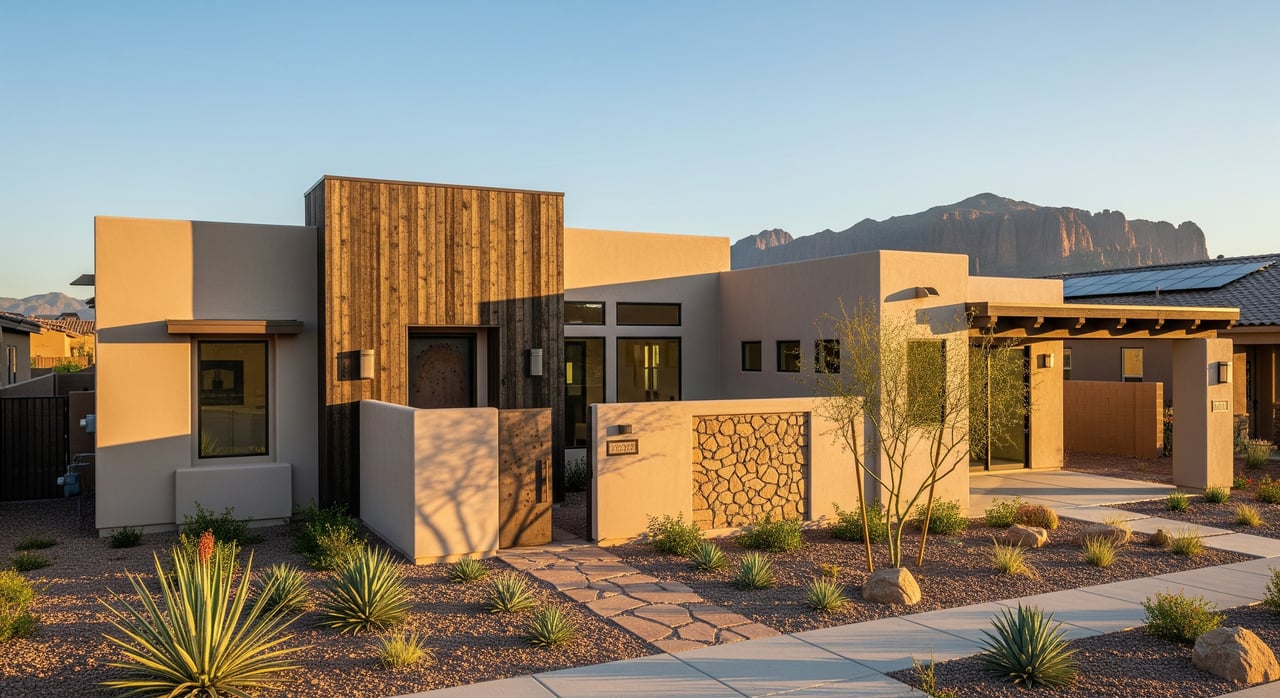
Thinking about buying in Mesa but keep hearing about build-to-rent communities? You are not alone. Many buyers are weighing flexibility and low-maintenance living against the long-term benefits of ownership. In this guide, you will learn what build-to-rent means in Mesa, how it can affect your options and pricing, and how to decide whether renting first or buying now is the better move for you. Let’s dive in.
Build-to-rent basics
Build-to-rent, often called BTR, are single-family homes or townhomes that are built to be rented long term. A single owner or operator runs the entire community, so you get on-site or centralized management, consistent services, and community amenities. Floor plans are standardized, finishes are durable, and yards are designed for low upkeep.
BTR is different from renting a home from an individual landlord. These are professionally managed, scaled communities that operate more like a neighborhood of single-family homes with apartment-style services. It also differs from apartments since you get single-family features like a private garage, a yard, and more separation from neighbors.
Typical owners include institutional investors, single-family rental companies, and builders with rental divisions. Leases tend to be 12 months or longer, and pricing targets steady occupancy and predictable rent growth.
Why Mesa attracts BTR
Phoenix metro, including Mesa, has been a top target for BTR development. Strong in‑migration to the Sun Belt, job growth, and the region’s relative affordability compared with coastal markets continue to attract new households. Mesa’s size, available land corridors, and proximity to employment in manufacturing, healthcare, education, and aerospace make it a logical fit for this housing type.
Industry researchers report that BTR has expanded quickly in fast-growing Sun Belt metros. In our region, two formats show up most often: suburban single-family rental subdivisions on small lots, and infill townhome or courtyard-style communities near jobs or transit.
If you want to track specific projects, keep an eye on City of Mesa planning agendas and local development news. Projects evolve quickly, and approvals can change timing and locations.
How BTR changes your options
BTR adds more single-family rentals to the market. That can help relocating households and local renters who want a yard, garage, and neighborhood feel without taking on ownership yet. In the short term, that added rental supply can ease some pressure on the broader housing market by giving people more places to live.
For buyers, the direct effect is that BTR homes are not for sale while they are owned by investors. If investors are also purchasing resale homes to convert to rentals, that reduces for-sale inventory and can make buying more competitive. If most BTR in a given area is new construction built specifically for rent, it adds total housing without taking away existing for-sale homes.
Pricing impacts depend on scale. When investor buying is modest, the effect on for-sale prices is usually limited. If investor activity is large and sustained, it can tighten for-sale supply and support price growth.
Rent vs buy in Mesa
You may be deciding whether to rent in a BTR community first or buy now. Start with your time horizon and financial goals. If you plan to move again soon or want to test different neighborhoods, a BTR lease offers flexibility. If you want stability and long-term equity, buying may be the better path.
Advantages of renting in BTR:
- Flexibility to move after your lease ends without a sale process.
- Lower upfront costs, since you bring a security deposit instead of a down payment and closing costs.
- Newer homes with centralized maintenance, which reduces surprise repairs.
Advantages of buying:
- Potential to build equity over time and benefit from appreciation if the market performs well.
- More control over your home, including improvements, pets, and long-term stability.
- The ability to lock in a mortgage payment, which can act as a hedge against rent increases.
A simple way to compare:
- Upfront costs: down payment and closing costs vs security deposit and initial rent.
- Monthly cash flow: mortgage, taxes, insurance, HOA, and maintenance vs rent and renter’s insurance.
- Time horizon: buying usually becomes favorable when you plan to stay 5 to 7 years or longer, but the exact break-even depends on prices, rates, and your costs.
How BTR affects pricing and rents
BTR operators aim for steady occupancy and predictable rent growth, which can mean rents track demand closely. In high-demand areas, BTR rents may be comparable to or higher than nearby apartments because you are getting a single-family home with added space and privacy. For-sale home prices continue to follow supply and demand, mortgage rates, local incomes, and investor activity.
If you want to understand current pressures in your part of Mesa, watch these indicators:
- Active for-sale inventory and months of supply.
- Median sale price and year-over-year change.
- Rent trends and vacancy rates for single-family rentals across the Phoenix metro.
How to evaluate a BTR community
If you are considering a BTR lease, ask clear, practical questions so you know what you are getting:
- Who owns and manages the community, and how accessible is management?
- What are the standard lease terms, and are there options beyond 12 months?
- What is included in rent, such as landscaping, utilities, internet, or amenity access?
- How are maintenance requests handled, and what is the typical response time?
- What are the pet policies, including pet rent and breed or size rules?
- What are the tenant selection criteria, income, and credit requirements?
- Are there caps on rent increases at renewal, and do they offer move-in concessions?
- Can you make minor improvements, and how are alterations handled at move-out?
- Are subletting or short-term rentals allowed under the lease and HOA rules?
How to compare buying a similar home
If you are leaning toward buying, build a side-by-side picture so the numbers and lifestyle fit are clear:
- What is the current median sale price for the neighborhood and how have prices trended?
- What will your total monthly costs be, including mortgage, taxes, insurance, HOA fees, and a maintenance reserve?
- What are the HOA rules, fees, and reserves in new subdivisions, and how might they change over time?
- What is the resale demand for the area based on commute access, nearby employment, and amenities?
- Are there builder warranties or protections if you are comparing to new construction?
- What are your mortgage options, rate scenarios, and any down payment assistance programs you might qualify for?
Neighborhood and lifestyle checklist
Whether you rent in a BTR community or buy, make sure the area fits your day-to-day life:
- Proximity to work centers in Downtown Mesa, Tempe, and Phoenix, plus transit options.
- Access to groceries, healthcare, parks, recreation, and everyday services.
- Schools that serve the neighborhood. Review official district information and visit campuses to understand programs and resources.
- Future development plans from the City of Mesa that could affect traffic, amenities, or neighborhood character.
Smart next steps in Mesa
If you want flexibility for the next year or two, a BTR lease can be a smart bridge while you learn neighborhoods, watch rates, and build savings. If you are ready to plant roots for the next 5 to 7 years, buying can put you on a path to equity and long-term stability. There is no one-size-fits-all answer.
A local plan makes the difference. Pair neighborhood insights with a rent-versus-buy budget that fits your timeline. Our team helps you compare specific BTR options, new construction, and resale homes across Mesa and the greater Phoenix area so you can move with confidence.
If you want a clear path tailored to your goals, connect with us for guidance and a personalized market plan. Start the conversation with Joseph Fear.
FAQs
What is a build-to-rent community in Mesa?
- A build-to-rent community is a neighborhood of single-family homes or townhomes built to be rented long term, owned and managed by one company, with standardized floor plans and amenities.
How does BTR affect Mesa homebuyers?
- BTR adds rental options but those homes are not for sale while held by investors, which can keep for-sale inventory tighter if investor buying is significant.
Are BTR rents higher than apartments in Mesa?
- They can be comparable or higher in high-demand areas because you get a single-family home with a yard, garage, and more privacy than a typical apartment.
When is renting in BTR smarter than buying?
- Renting may fit if you need flexibility, expect to move soon, want lower upfront costs, or prefer centralized maintenance while you explore neighborhoods.
What should I compare if I am ready to buy in Mesa?
- Compare total monthly costs, HOA rules, neighborhood trends, commute access, builder warranties, and your mortgage options to align the home with your long-term plans.
