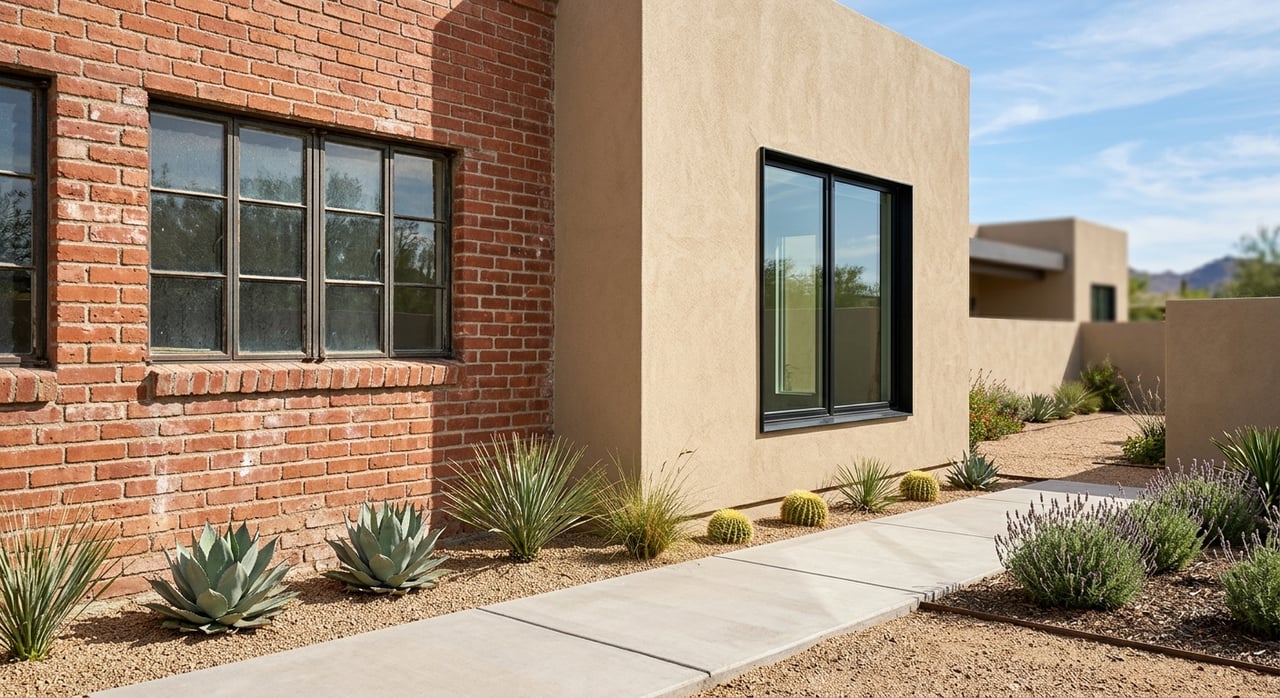
Wondering whether a historic Phoenix home or a newer build is the better fit for your life? In this market, that choice is rarely just about the year a home was built. It is also about where you want to live, how much maintenance you want to take on, and what matters most to you day to day. If you are weighing charm against convenience in Phoenix, this guide will help you compare the real tradeoffs. Let’s dive in.
Why this choice matters in Phoenix
Phoenix has a wide mix of housing ages, and that shapes your options. According to the City of Phoenix, 45.0% of owner-occupied homes and 38.5% of renter-occupied homes were built before 1980. At the same time, newer housing continues to appear through infill projects in established areas and in growth areas like North Gateway, Laveen, and Estrella.
That means your search may quickly turn into a lifestyle decision. In Phoenix, comparing historic versus newer homes often means comparing central neighborhoods near downtown with newer communities farther out. The right answer depends on how you balance character, systems, location, and upkeep.
Where older and newer homes cluster
Historic homes near central Phoenix
Many of Phoenix’s oldest neighborhoods surround downtown. The City identifies Central City as the urban center and notes that some nearby neighborhoods are designated historic districts with notable architecture and tree-lined streets.
Residential historic districts listed by the City include Coronado, Encanto-Palmcroft, F.Q. Story, Garfield, Willo, and Windsor Square. If you are drawn to older homes, these areas often come up early in your search. They tend to offer a stronger sense of architectural variety and established streetscapes.
Newer homes in growth areas
Newer homes in Phoenix often show up in two forms. One is infill housing on vacant or underused land within established neighborhoods. The other is master-planned growth in areas such as North Gateway, Laveen, and Estrella.
These areas often appeal to buyers who want newer infrastructure, more modern floor plans, and the feel of planned development. In some cases, you may also find easier freeway access tied to how those villages have grown.
Character versus convenience
What historic Phoenix homes can offer
Older Phoenix homes are not all the same. Some early subdivisions included large lots, tree-lined streets, and space for gardens or orchards, while later replats created more typical 50-by-135-foot lots.
Architecturally, historic Phoenix can mean very different things. In Alhambra, for example, the east side includes large homes along the historic Murphy Bridle Path, while other parts of the village are known for smaller postwar ranch homes. If you love design details and neighborhood personality, older homes can offer a lot of variety.
What newer Phoenix homes can offer
Newer homes usually attract buyers who want modern systems and a simpler day-to-day ownership experience. Depending on the area, you may find more contemporary layouts, newer cooling systems, and fewer immediate repair projects.
That does not automatically mean a better fit. Infill construction may be brand new, but it can come with tighter lot economics than some older neighborhoods. If yard size, spacing, or long-established tree cover matter to you, it is worth looking beyond the home itself.
Maintenance and repair expectations
One of the biggest differences between older and newer homes is the level of maintenance you should plan for. Phoenix’s housing stock includes many homes built before 1980, and the City identifies pre-1980 housing as a lead-based paint risk.
The City also notes that aging housing stock often needs rehabilitation and that owners may not always have resources for essential repairs. For you as a buyer, that means older homes may deserve a larger reserve for repairs, system updates, exterior upkeep, and health and safety checks.
That does not mean you should avoid an older home. It simply means you should budget with clear eyes. A historic or older property may reward you with location and character, but it often asks for more ongoing attention.
Energy efficiency in Phoenix heat
Why cooling matters more here
Phoenix’s climate changes the historic versus newer conversation. The City describes Phoenix as the hottest large city in the country and calls shade critical infrastructure.
That makes cooling performance a major part of your home search. Insulation, HVAC condition, window performance, and tree cover can all affect comfort and utility costs.
Newer homes may have an efficiency edge
Newer construction can have an advantage when it is built to more modern standards. ENERGY STAR states that certified homes and apartments exceed minimum energy-code requirements by at least 10% and are designed to save at least 10% on annual utility bills.
If lower summer energy use is high on your list, a newer home may check that box more easily. Still, not every newer home performs the same, so it helps to ask detailed questions about the cooling system, insulation, and overall efficiency features.
Older homes can improve with smart upgrades
An older Phoenix home is not automatically inefficient. The City’s historic-property guidance recommends starting with an energy audit and notes that APS and SRP residential customers are eligible for $99 energy audits.
The same guidance suggests improvements such as weatherization, duct sealing, insulation, heat-pump upgrades, and window repair or retrofit before full replacement. Phoenix also offers weatherization assistance for eligible households, which may matter if you are comparing renovation costs with the convenience of a newer home.
Historic review, HOA rules, and approvals
Not every older home is historic
This is an important point for Phoenix buyers. An older home is not automatically a historic property.
According to the City, eligibility for the Phoenix Historic Property Register generally requires at least 50 years of age, historical significance, and historic integrity. So while some older homes have few added restrictions, others may fall inside a historic district or be individually listed.
What to know about historic approvals
The City’s Historic Preservation Office reviews exterior changes to properties on the Phoenix Historic Property Register. A Certificate of Appropriateness or Certificate of No Effect is required for exterior permit applications affecting listed properties, including infill construction and changes to non-historic properties inside historic districts.
For you, that means renovation plans should be part of your decision before you buy. If you want to make major exterior changes, you will want to understand the review process early.
What to know about newer community rules
Newer subdivisions often bring a different layer of oversight. Arizona law defines a planned community as a development where owners are mandatory members and must pay assessments.
State law also requires associations to make records reasonably available within 10 business days. In practical terms, if you are considering a newer planned community, you should read the CC&Rs, budget, and architectural rules closely so you understand what is expected.
Lot size, layout, and neighborhood feel
Lot size is one of the most overlooked parts of this comparison. Older Phoenix neighborhoods can vary a lot, from streets with larger lots and mature landscaping to later subdivisions with more standard dimensions.
Newer homes may offer more updated interiors, but the lot itself can be smaller, especially with infill. If outdoor space, mature trees, or a more established street pattern matter to you, those details deserve a close look.
It helps to compare the whole package rather than the square footage alone. A larger lot with an older house may fit your life better than a newer home with less outdoor space, or the reverse may be true if low maintenance is your goal.
Commute and daily lifestyle fit
Central neighborhoods and access
Central Phoenix offers a different mobility profile than outer growth areas. The City describes Central City as a government and employment center, a transportation hub, and the location of freeways, public transit, and Sky Harbor International Airport.
If you value proximity to downtown or easier access to the urban core, an older home in a central neighborhood may line up well with your routine. Phoenix’s mean travel time to work is 25.6 minutes, but that citywide average can hide big differences between neighborhoods.
Outer growth areas and planned development
Growth villages such as North Gateway, Estrella, and Laveen highlight freeway access, transportation corridors, redevelopment, and expanding residential communities. These areas may appeal to buyers who are comfortable trading a more central location for newer homes, newer infrastructure, or the feel of master-planned development.
This is where your priorities matter most. If your ideal setup includes newer systems and planned amenities, a newer home farther out may make sense. If being near the core matters more, an older home in central Phoenix may be the stronger match.
How to decide between historic and newer
If you are comparing both options, focus on the tradeoffs that affect your daily life most:
- Choose an older or historic home if you value character, central location, architectural variety, and established streetscapes.
- Choose a newer home if you value modern systems, potentially better energy performance, and the structure of newer communities.
- Look deeper before deciding on either by reviewing lot size, cooling efficiency, approval rules, and likely maintenance costs.
- Remember that in Phoenix, this is often a location decision just as much as an age decision.
A smart home search here is less about declaring one type better than the other. It is about matching the home to your budget, your commute, your comfort needs, and how much upkeep you want to handle.
Whether you are drawn to a historic district near downtown or a newer home in one of Phoenix’s growth areas, the best results come from comparing the full picture, not just the listing photos. If you want help weighing neighborhood fit, resale potential, and the real tradeoffs between older and newer homes in Phoenix, connect with Joseph Fear.
FAQs
What counts as a historic home in Phoenix, AZ?
- In Phoenix, an older home is not automatically historic. The City says register eligibility generally requires at least 50 years of age, historical significance, and historic integrity.
Where are historic homes commonly found in Phoenix, AZ?
- Many of Phoenix’s oldest neighborhoods surround downtown, and City-listed historic districts include Coronado, Encanto-Palmcroft, F.Q. Story, Garfield, Willo, and Windsor Square.
Are newer homes in Phoenix, AZ more energy efficient?
- They can be. Newer construction may have an efficiency advantage when built to modern standards, and ENERGY STAR says certified homes exceed minimum energy-code requirements by at least 10% and are designed to save at least 10% on annual utility bills.
Do older Phoenix, AZ homes always cost more to maintain?
- Not always, but older homes often deserve a larger maintenance reserve because aging systems, exterior upkeep, and health and safety issues can be more common in pre-1980 housing.
Do historic homes in Phoenix, AZ have renovation restrictions?
- Some do. The City’s Historic Preservation Office reviews exterior changes to properties on the Phoenix Historic Property Register, and certain exterior permit applications require formal approval.
What should you review in a newer planned community in Phoenix, AZ?
- You should carefully review the CC&Rs, budget, assessments, and architectural rules because newer subdivisions are often planned communities with formal requirements for owners.
