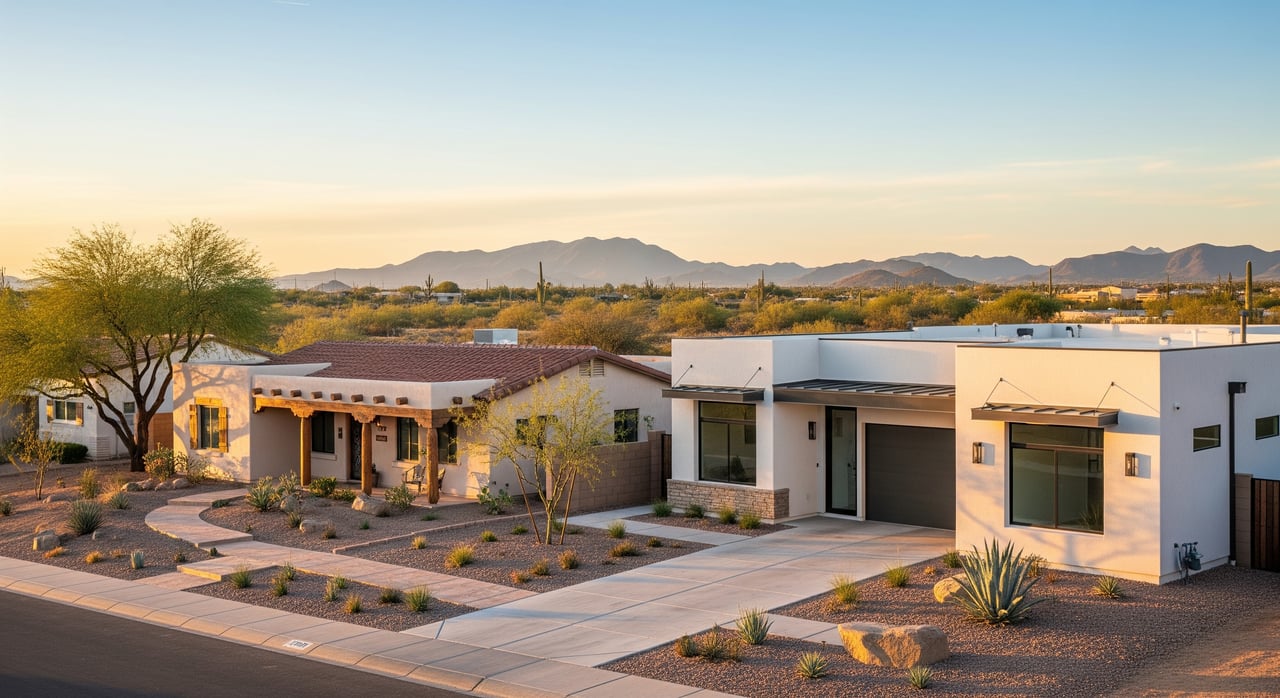
Should you buy a brand-new home or a resale in Buckeye? With so many master-planned communities under construction and established neighborhoods to choose from, it can feel like a high-stakes puzzle. Your goal is simple: move into a home that fits your life, budget, and timeline without surprises. In this guide, you will learn the real differences between new construction and resale in Buckeye, how to compare total costs, what to look for with HOAs and special assessments, and how to protect yourself during inspections and closing. Let’s dive in.
Buckeye market snapshot
Buckeye has grown quickly over the past two decades. Much of the housing stock is in large master-planned communities with parks, trails, and neighborhood amenities. That means you will see many new-build options alongside resale homes in more mature pockets.
You will also weigh commute and infrastructure. Buckeye sits on the far west side of the Phoenix metro, so you may trade lower cost per square foot and larger lots for longer drives to job centers. As new roads and services roll out, neighborhoods continue to evolve.
Finally, new construction follows the City of Buckeye permitting process, with builders required to hold proper licenses. It is smart to confirm builder licensing and understand where a community is in its development phase before you commit.
Move-in timelines: what to expect
Your timeline is one of the biggest factors in this decision. Buckeye offers both quick-move options and longer build schedules.
New construction timing
- Spec or inventory homes can sometimes close in 30 to 120 days if completed or near completion.
- Semi-custom and custom homes commonly take 6 to 12 months or longer depending on permits, materials, labor, and inspections.
- Builders set the construction schedule and closing window. Delays are possible, so review the contract’s delay and possession clauses closely.
- Most builders schedule staged walk-throughs. Ask when you can bring an independent inspector for pre-drywall and final inspections.
Resale timing
- After offer acceptance, most financed resale closings take about 30 to 45 days. Cash purchases can be faster.
- Your schedule depends on inspection, appraisal, and lender timelines, plus negotiation with the seller.
Buckeye takeaway on timing
If you need predictability for a job start or school calendar, resale is often the faster, more certain option. If you can be flexible and want to select finishes or floorplans, new construction can work well, especially if you find a ready or nearly ready inventory home.
Price and negotiation: beyond the headline number
Both paths can be a good value if you know where the numbers hide. The key is to compare total cost, not just list price.
New construction pricing
- Builders publish base prices, but the final price usually includes a lot premium, structural options, design upgrades, landscaping, and community start-up fees.
- Incentives can be attractive. Common offers include mortgage rate buydowns, closing-cost credits, upgrade packages, or lot-price adjustments. Some incentives require using the builder’s preferred lender or title partner.
- Base price is not always negotiable, especially on popular models. Incentives and upgrades are often where you find flexibility, particularly during end-of-quarter pushes or in slower phases.
What to do: Ask for an itemized purchase agreement and a sample closing statement that shows every dollar from lot premium to design center selections. Confirm whether incentives reduce your actual cash to close and monthly payment.
Resale pricing
- Resale value is guided by comparable recent sales and the home’s condition.
- You can negotiate on price, repairs after inspection, closing credits, and the closing date.
What to do: Request a comparative market analysis to judge value, then budget for any needed updates or maintenance.
Warranties and inspections: your safety net
How you protect yourself differs between new and resale. Both paths benefit from a strong inspection plan.
New-build warranties
- Many builders offer a common structure: about 1 year for workmanship, 2 years for major systems, and up to 10 years for structural components. Coverage varies, so read the documents.
- Builders may provide a one-year walk-through and a process for submitting punch-list items. Response times and exclusions differ by builder.
- Always request the full written warranty, ask about third-party backing, and understand how to file a claim and what is excluded.
Resale protections
- There is no automatic builder warranty on resale homes. Some sellers offer a short-term home warranty policy as a negotiation item.
- Your primary protection is a thorough inspection and the ability to negotiate repairs or credits.
Inspections for both paths
- New build: Schedule independent pre-drywall and final inspections if allowed by contract. Confirm timing and scope in writing.
- Resale: Plan for a general home inspection plus specialists as needed, such as roof, HVAC, pool, pest, or sewer line.
HOAs, special assessments, and property taxes
Many Buckeye neighborhoods are in master-planned communities with layered governance. Understanding how that impacts your budget and flexibility is essential.
- HOAs: Newer communities often have a master HOA and sometimes a sub-association. Expect CC&Rs, architectural review, amenity fees, and possibly start-up contributions at closing. Dues can escalate over time.
- Rules: Architectural controls and rental policies vary by community. Review these carefully to understand how they affect exterior changes, parking, and use.
- Special districts: Some new developments rely on bonds or Community Facilities Districts that appear as extra line items on your property tax bill. Know whether a property sits in a special district and what the remaining obligations are.
- Property taxes: Arizona taxes are moderate compared to many states, but assessments, HOAs, and utility needs all influence your monthly carry. New homes may also be assessed differently based on the initial sale and improvements.
What to do: Review the HOA budget, reserve information, CC&Rs, and disclosure packet. Ask about upcoming assessments. Request a preliminary title report and confirm any special districts or bonds. Check tax history to estimate your annual obligation.
Location, maturity, schools, and services
Your day-to-day experience can differ between a new-build area and an established neighborhood.
- Neighborhood maturity: Resale areas often have mature landscaping and known traffic patterns. Newer communities may lack shade and immediate retail at first but usually plan for parks, trails, and future commercial sites.
- Schools and services: School attendance boundaries can change with growth. Verify current school assignments and any planned new campuses. Access to grocery, medical, and retail can lag behind initial home construction in early phases.
- Commute and roads: Expect evolving infrastructure as Buckeye expands. Your drive to central Phoenix or other job centers may be longer from the edge of town. Keep an eye on planned roadway improvements that could change commute times over the next few years.
Decision framework: which path fits you
Use this quick guide to match your priorities to the right option.
- If you value speed and a predictable close, lean resale.
- If you want customization and modern energy-efficient systems and can be flexible on timing, lean new construction.
- If you want price transparency, resale often feels clearer unless a builder incentive creates a strong net benefit.
- If you need more space or a layout that does not exist in nearby resale inventory, new construction often wins.
- If you want fewer layers of HOA rules, many resale areas have simpler governance. New master-planned communities often have more rules and start-up fees.
- If you prioritize established services, resale may be best. If you are comfortable with growth and future amenities, new build can shine.
Total cost comparison checklist
Before you choose, compare monthly and upfront costs line by line.
New construction
- Base price, lot premium, structural options, and design upgrades
- Landscaping and backyard finish, if not included
- HOA dues, master and any sub-association
- Initial capital contributions, transfer fees, and amenity start-up costs
- Special assessment or CFD line items in property taxes
- Incentives and credits, plus any requirements for preferred lender or title
- Estimated utilities for larger lots and systems
Resale
- Purchase price, closing costs, and any seller credits
- Immediate repairs or updates from the inspection report
- Optional home warranty policy
- HOA dues and transfer fees, if applicable
- Property tax projections based on recent assessments
- Potentially higher utility costs in older homes
Tip: Build a side-by-side estimate so you can compare the true net cost today and over the next few years.
Appraisals and supply: thinking about resale value
New neighborhoods in fast-growth areas can appreciate as roads, retail, and schools arrive. They can also face pricing pressure if many new lots are released at once. Established resale areas typically have clearer comparable sales and steadier demand when supply is tight.
Appraisals on new homes can be straightforward when there are similar recent sales nearby, but they can be tricky if few finished comps exist. Lenders and appraisers may use model matches or nearby new-home comps. Discuss potential appraisal risk with your lender as part of your planning.
Your due diligence plan
Reduce surprises with a focused verification list.
- Get the builder’s itemized agreement and a sample final closing statement that shows lot premium, options, landscaping, and fees.
- Ask whether any special tax districts or CFD assessments apply, and confirm in title and county records.
- Request the full builder warranty package, claim process, and transferability.
- Confirm whether independent inspections are allowed and exactly when they can occur.
- Get all incentive terms in writing, including any requirement to use preferred partners.
- Review HOA budgets, CC&Rs, and reserve information, and ask about upcoming assessments.
- Check city transportation and development plans to understand how commute and services will evolve.
- For resale, budget for deferred maintenance items such as roof, HVAC, pool, or energy upgrades.
- Ask about future lot releases and nearby projects that may influence supply and demand.
- Verify what concessions builders and sellers are offering in Buckeye right now by reviewing recent local closings.
How to move forward with confidence
Choosing between new construction and resale in Buckeye comes down to timing, budget clarity, lifestyle, and your tolerance for a developing neighborhood. If you want modern design and are comfortable with a variable delivery date and HOA rules, a new build can be a great fit. If you value speed, established services, and a clearer view of neighborhood performance, resale may be right for you.
A local, advocacy-first agent can help you compare communities, line up inspections, evaluate builder incentives, and negotiate a smart contract on either path. If you want a tailored plan that puts your goals first, reach out. We will help you weigh timing, total cost, and long-term value so you can buy with confidence.
Ready to compare your best options in Buckeye? Connect with Joseph Fear for a personalized plan.
FAQs
How long does it take to buy new construction in Buckeye?
- Spec and inventory homes can sometimes close in 30 to 120 days, while semi-custom or custom builds often take 6 to 12 months or more depending on permits and builder schedules.
What extra costs should I expect beyond a new home’s base price?
- Plan for lot premiums, structural options, design upgrades, landscaping, HOA start-up fees, and any special tax district assessments that may appear on your property tax bill.
Are builder incentives worth it in Buckeye right now?
- They can be, especially if they reduce your cash to close or monthly payment, but confirm terms in writing and whether using the builder’s preferred lender or title company is required.
Do I need an inspection on a new-build home?
- Yes. Arrange independent pre-drywall and final inspections if the contract allows and confirm timing and access with the builder in writing.
How do HOAs in master-planned communities affect me?
- Expect CC&Rs, architectural review, amenity fees, and possible start-up contributions; review budgets and rules to understand dues, flexibility, and any upcoming assessments.
What is a Community Facilities District and why does it matter?
- Some neighborhoods use special districts or bonds to fund infrastructure, which can add a separate line item to your property tax bill and affect your monthly carry.
Is resale faster than building new in Buckeye?
- Usually yes. Most financed resale purchases close in about 30 to 45 days after contract, while new builds often take longer unless you choose an inventory home.
How do appraisals work for new homes compared to resale?
- Appraisers may use similar model sales or new-home comps nearby; if few finished comps exist, appraisal risk can rise, so discuss this with your lender early.
What protections do I have after closing on a new-build home?
- Many builders provide a workmanship, systems, and structural warranty with specified coverage periods; get full documents and follow the punch-list process.
How can I compare total monthly costs between new and resale?
- Create a side-by-side estimate that includes mortgage payment, HOA dues, special assessments, expected utilities, and for new builds, lot premiums and upgrades factored into your financing.
