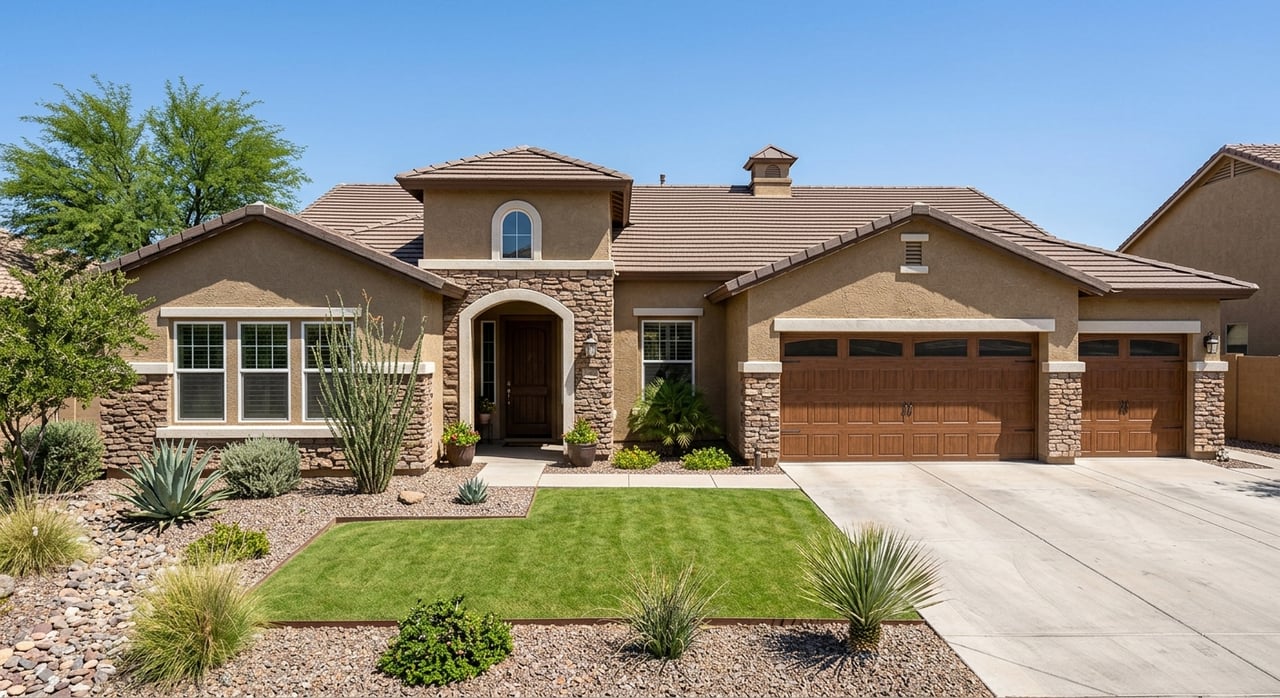
Trying to choose between the West Valley and the East Valley can feel like choosing between two different versions of Phoenix living. You may be weighing price, commute times, amenities, or simply which side of town fits your day-to-day life better. The good news is that both sides offer strong options, but they serve different priorities. If you want a practical way to narrow your search, this guide will help you compare cost, lifestyle, transit, and access so you can move with confidence. Let’s dive in.
West Valley vs East Valley Basics
When people talk about the West Valley and East Valley, they are usually describing two broad parts of the greater Phoenix metro. In simple terms, the West Valley often offers lower entry pricing and a freeway-first lifestyle, while the East Valley tends to offer stronger rail access, easier connections to Tempe, Mesa, and Chandler job hubs, and a higher top-end price range.
That said, neither side is one-size-fits-all. The West Valley includes newer growth areas like Buckeye and Goodyear, along with more established parts of Glendale. The East Valley includes a mix of historic Mesa areas, Tempe’s urban transit corridor, and newer suburban communities in Chandler, Gilbert, and Queen Creek.
Home Prices by Valley
For many buyers, price is the first filter. Based on current city medians summarized in the research, the West Valley generally starts lower than the East Valley, especially if you are comparing entry points across multiple cities.
On the west side, reported median prices include Buckeye at $405,000, Avondale at $424,500, Glendale at $425,000, Surprise at $439,450, Goodyear at $486,212, Peoria at $540,000, and Litchfield Park at $550,500. Broadly, that places much of the West Valley in the lower-to-mid $400,000s through the mid-$500,000s.
On the east side, current city medians include Mesa at $469,000, Tempe at $480,000, Chandler at $557,500, Gilbert at $575,000, Queen Creek at $634,990, and Scottsdale at $1,000,000. That creates a wider spread, with some relatively approachable options and some markets that move much higher very quickly.
What You Get for the Money
Price matters, but so does what comes with it. In the West Valley, many buyers are drawn to the newer, master-planned feel found in growth areas. Buckeye’s planning documents reference master-planned communities, and the city has highlighted the large-scale Teravalis mixed-use master-planned community that is projected to include 100,000 homes.
Goodyear is also expanding with major mixed-use growth, including the GSQ downtown corridor. If your goal is a newer suburban setting, more recent construction, or a neighborhood with a planned-growth feel, the West Valley may give you more of those options at a lower starting price.
In the East Valley, housing styles are more mixed. Mesa includes historic preservation districts and neighborhoods, while Tempe and Chandler offer a blend of urban redevelopment, transit-oriented areas, and newer housing. Gilbert also continues to add mixed-use residential growth, giving buyers more variety if they want something between suburban and walkable activity centers.
Commute and Transit Differences
Your daily routine can be the deciding factor. If you drive most places and want a freeway-led setup, the West Valley may feel more natural. If you want more public transit choices, especially rail, the East Valley has a clear advantage.
West Valley Commutes
The West Valley is still largely built around freeway travel. Cities like Goodyear point to regional bus options such as Route 562 to Phoenix, and Buckeye notes local and regional transit service through Valley Metro. Goodyear and Avondale also use WeRIDE microtransit, which supports on-demand and bus-based mobility rather than rail-centered commuting.
Freeway access is a major part of west-side living. Glendale notes its location just west of Loop 101 and about 10 minutes north of I-10, which helps connect residents to jobs, entertainment, and other parts of the metro. If your routine depends on driving and you want straightforward highway access, this side of town often fits that pattern well.
East Valley Transit Access
The East Valley stands out for transit. Tempe says it is the only Greater Phoenix city with light rail from border to border, along with a streetcar, local bus routes, express buses, free circulators, and more than 220 miles of bicycle facilities. Tempe also notes that light rail connects Mesa through downtown Tempe and into Phoenix.
Mesa also provides local bus, express bus, and Metro Light Rail service. If you want more transportation options beyond your car, or you like the idea of living near rail-connected corridors, the East Valley is usually the stronger starting point.
Job Access Across the Metro
Where you work, or where you might work next, should play a big role in your decision. Both sides have employment centers, but the East Valley has several major job hubs clustered around Tempe and Chandler.
On the west side, Glendale’s economic development pages describe the New Frontier District as a significant employment corridor with offices for companies such as Mattel, Bechtel, and Credit Union West. That gives the West Valley meaningful job access of its own, especially for buyers who want to stay close to west-side employers.
In the East Valley, Tempe’s Mill Avenue and Town Lake area has more than 20,000 jobs, and Chandler says it has five designated employment corridors. Chandler also reports that its top companies together employ more than 35,000 people, while West Chandler alone contains about 29,900 jobs. If job proximity in Tempe, Mesa, or Chandler is high on your list, the East Valley may save you time and simplify your routine.
Lifestyle and Amenities
Once you narrow down budget and commute, lifestyle usually becomes the tie-breaker. This is where the valleys start to feel very different.
West Valley Lifestyle
The West Valley leans into large-scale entertainment, sports, and desert recreation. Glendale describes Westgate Entertainment District as Arizona’s premier entertainment destination, anchored by State Farm Stadium and Desert Diamond Arena. If you like major events, game days, concerts, and destination-style entertainment, the west side has a strong pull.
Outdoor access is another west-side strength. White Tank Mountain Regional Park spans nearly 30,000 acres, and Estrella Mountain Regional Park covers 19,840 acres. If you picture weekends on trails, mountain views, and large desert open spaces, the West Valley may check more of those boxes.
East Valley Lifestyle
The East Valley has a different rhythm. Tempe says Tempe Town Lake is Arizona’s second-most visited public attraction, drawing more than 2.4 million visitors each year and hosting more than 40 special events annually. That gives the area a strong mix of water-oriented recreation and year-round activity.
Mesa says its Mesa Arts Center is the largest arts center in Arizona, Gilbert has the Riparian Preserve, and downtown Chandler is known for live music, festivals, and restaurant-centered activity. If you want arts, downtown energy, local events, and more neighborhood-scale gathering places, the East Valley may feel like a better match.
Which Side Fits You Best?
If you are looking for more home for the money, newer suburban growth, and a daily life centered around freeway access, the West Valley is often the better place to start. This is especially true if cities like Buckeye, Goodyear, Surprise, Glendale, or Litchfield Park already align with your budget and lifestyle.
If you are looking for stronger transit access, closer connections to major job centers in Tempe, Chandler, and Mesa, and a wider mix of urban, historic, and amenity-rich environments, the East Valley often rises to the top. This may be especially appealing if Tempe, Mesa, Chandler, Gilbert, Queen Creek, or Scottsdale are already on your radar.
A Smart Way to Decide
If you are still torn, try comparing the two sides using a short checklist:
- Your target budget
- Your work location or commute pattern
- How often you want to rely on transit
- Whether you prefer newer master-planned growth or more varied housing character
- The types of amenities you use most, such as parks, events, dining, arts, or large entertainment districts
In many cases, the right answer is less about which valley is "better" and more about which valley matches your real life. A buyer who values newer suburban growth and price flexibility may lean west. A buyer who wants rail access and closer proximity to East Valley job centers may lean east.
If you want help narrowing your search across Phoenix, the West Valley, or the East Valley, working with a local team can save you time and help you compare options with more clarity. Joseph Fear can help you build a personalized move strategy based on your budget, commute, and lifestyle goals.
FAQs
Which side of Phoenix is usually more affordable for homebuyers?
- The West Valley is usually more affordable based on current city medians in places like Buckeye, Avondale, Glendale, and Surprise.
Which side of Phoenix has better public transit options?
- The East Valley has stronger public transit options, especially in Tempe and Mesa, thanks to light rail, streetcar service, buses, and connected transit corridors.
Which side of Phoenix is better for access to major job hubs?
- The East Valley often offers easier access to major job hubs in Tempe and Chandler, while the West Valley also has important employment areas such as Glendale’s New Frontier District.
Which side of Phoenix offers newer master-planned communities?
- The West Valley is often the stronger choice for newer master-planned growth, especially in cities like Buckeye and Goodyear.
Which side of Phoenix has more entertainment and outdoor recreation?
- The West Valley stands out for major sports and entertainment venues plus large desert parks, while the East Valley offers lake activity, arts venues, and downtown event districts.
